
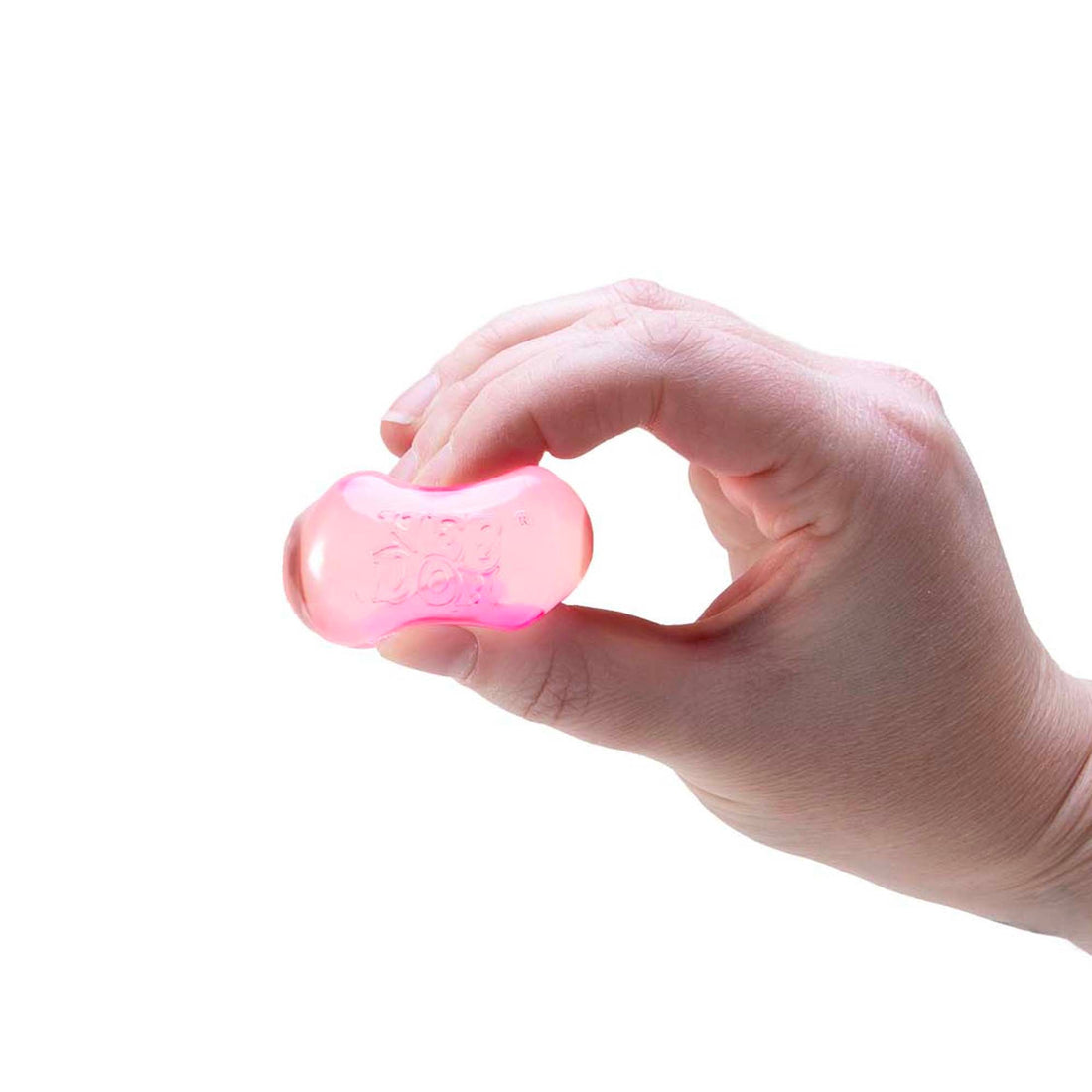
NeeDoh is a series of soft, squishy sensory toys from Schylling, often referred to as NeeDoh squishy, designed to be stretched, squeezed, and "smashed" before returning to their original shape. The brand describes them as a sensory and calming fidget experience, and several of the products are also marketed as aids for focus, attention, and "centering."
It is precisely this simple idea that makes NeeDoh so popular: they do one thing, but they do it very well. They give hands something to do, provide tactile resistance, and deliver a repetitive sensory experience that many find satisfying and regulating.
What exactly is NeeDoh?
NeeDoh are, in practice, squishy sensory toys and fidgets with various shapes, textures, and fillings. Some are classic "globes," others are cubes, drops, or figures. The common denominator is that they are designed to be gently squeezed in the hand, providing a soft, slightly sticky, and very tactile response. Schylling describes them as products for home use, school, office, car, and "wherever" one needs a little calm or sensory stimulation.
This is also why NeeDoh appeals to children, teenagers, and adults alike. These are not just "toys" in the traditional sense. They function just as much as small tools for restlessness, anxiety, and the need to have something in one's hands.
Why is NeeDoh used as stims?
When people talk about "stims," they often refer to repetitive movements or actions that provide sensory input, help stay calm, or regulate emotions. The Autistic Society describes stimming as something many use for sensory input, to stay calm, or to express joy.
NeeDoh fits well into this because they provide consistent tactile input without requiring much thought. Squeezing, rolling, pulling, and shaping something soft in your hand can be a discreet way to get sensory input. For some, it can contribute to calm; for others, to focus; and for others still, it is simply a pleasant way to regulate excess energy. This does not mean that one product works the same for everyone, but it explains why NeeDoh is perceived as useful as stims for many.
It is important to be precise here: NeeDoh are not medical devices and not a treatment. But like many other fidgets, they can serve as a simple, low-threshold aid for self-regulation in everyday life.
Why can NeeDoh help adults put down their phones?
Many adults pick up their phones not because they actually need them, but because their hands seek stimulation, habit, or a small dopamine break. A fidget like NeeDoh cannot "cure" problematic screen use, but it can fulfill some of the same functions in the moment: giving the hands something to do while the brain gets a small break. This is a reasonable conclusion based on how fidgets are described as tools to keep hands busy, reduce restlessness, and support focus.
In practice, a NeeDoh on your desk, on the sofa, or in the car can be just enough to prevent you from automatically opening an app every time you have a restless second. For many adults, it's not about quitting the phone entirely, but about breaking the automatic habit. In that context, something as simple as a good fidget can actually help surprisingly much.
Why is NeeDoh squishy trending in 2026?
NeeDoh are not just popular because they are comfortable. They are also extremely "shareable." Videos of squeezing, stretching, slow squishing, and bouncing back almost act as a little ASMR in the feed, making them perfect for TikTok, Reels, and shorts. Several articles point out that viral spread on social media is a key reason why NeeDoh and similar squishy toys have received a new boost.
In addition, they fit perfectly into a larger trend where people want small products that feel good right away. Not everything has to be screen-based, advanced, or expensive. Sometimes people just want something satisfying in their hand. The fact that stores report quickly sold-out batches supports that this is not just a niche interest, but a real trend in 2026.
It also helps that the series is constantly expanding with new shapes, textures, and variations. When a product functions as both a sensory toy, a collectible, and a trend item, it gains momentum more easily in the market.
Are NeeDoh safe?
Schylling states on several NeeDoh products that they are recommended for ages 3 and up. Several product listings also have clear warnings about small parts and that they are not for children under 3 years old.
That is the fundamental part of safety. Used as intended, i.e., in the hand and at normal room temperature, these are products designed for sensory play and fidget use. But "safe" does not mean they should be misused, heated, or used in ways the manufacturer warns against.
There have also been reports of cases where gel contents from certain squishy/fidget products have caused concern if they leak or break, and Consumer Reports in 2025 called for further investigation into the potential for harm from gel in such products. Schylling has also stated that the products should not be heated, frozen, or microwaved, and that they have added extra warnings and collaborated with social platforms to remove content showing dangerous misuse.
The TikTok microwave trend: a really bad idea
Let's be very clear: putting NeeDoh in the microwave is an awful idea. The manufacturer explicitly warns against heating, freezing, or microwaving the products because it can lead to personal injury. This warning is stated on several of Schylling's own product pages.
The background is not theoretical. In 2025 and 2026, serious injuries were reported after children attempted this "hack" they had seen on social media. Parents and other media have reported specific cases where NeeDoh exploded after heating, causing burns to children's faces and hands. Loyola Medicine, according to the report, stated that this was not an isolated incident.
The reason is simple: when the contents become overheated, they can expand rapidly and splatter out as extremely hot mass. This can cause more severe injuries than many expect, especially because hot, sticky contents can adhere to the skin. It's not fun, not smart, and absolutely not worth trying.
So yes, NeeDoh can be fantastic sensory toys. But they should be used in the hand, not in the microwave, not in the freezer, and not as an experiment to "improve" the feel. TikTok is not a safety manual.
Why people like NeeDoh so much
The beauty of NeeDoh is their simplicity. No batteries, no screen, no noise, no complicated explanation. Just a direct, physical experience that many find calming, focusing, and satisfying.
For some, they are good as stims. For some, they are useful at work. For some, they are just fun. And for many, they are all three at once. That's exactly why they have become so popular: they solve a small, real need in everyday life.
FAQ about NeeDoh
What is NeeDoh?
NeeDoh are soft, squeezable sensory toys and fidgets from Schylling, designed to provide a satisfying tactile experience when you squeeze, stretch, and shape them.
What is NeeDoh used for?
They are often used for sensory stimulation, fidgeting, relaxation, and as something to hold in your hands when you need calm or focus. Several of Schylling's own product descriptions describe them as useful for focus, attention, and "centering."
Are NeeDoh good as stims?
For many, yes. Since they provide repetitive tactile input, they can function well as a discreet stim tool. However, needs are individual, so what suits one person may not suit another.
Can adults use NeeDoh?
Yes. Although they are also popular among children, they are widely marketed as products for both children and adults, and many use them at work or home as a quiet fidget.
Can NeeDoh help me use my phone less?
They can help some people break habits by giving their hands something else to do. It's not a cure for screen addiction, but as a small alternative to mindless scrolling, they can be surprisingly useful. This is a practical conclusion based on how fidgets are used to keep hands busy and support regulation and focus.
Are NeeDoh safe for children?
Schylling usually indicates 3+ on several NeeDoh products, along with a warning about small parts and that they are not for children under 3 years old. They should be used as intended and not misused.
Can you put NeeDoh in the microwave?
No. Absolutely not. Schylling explicitly warns against heating, freezing, or microwaving the products because it can lead to personal injury.
Why is the microwave trend dangerous?
Because the product can explode when its contents become overheated. There have been reports of serious burns to children who tried this after seeing the trend on social media.
Why are NeeDoh so popular in 2026?
Because they combine sensory experience, collectible value, trend factor, and viral videos that look satisfying on screen. Articles in 2026 point to both social media virality and quickly sold-out batches as signs of how strong the trend is, on par with Jellycat favorites.